CHI Company Investigation · Restaurants
McDonald’s
The Convenience Is Real. So Is the Optimization.
Quick-service restaurants · Counter · Drive-thru · Kiosk · App · Delivery · Rewards
Standard company investigation · No score assigned · Evidence current through 2 October 2026
McDonald’s has added real value: more ways to order, pay, collect and be rewarded. It also measures, and benefits from, larger orders, more frequent visits and more identifiable customers.
Most of the digital changes add an option rather than remove one: the counter is still there, and most restaurants still have a dining room. Some harder-to-measure experiential value, above all the physical child-focused layer of play areas and parties, has become less central. The evidence supports a mixed customer-value story, not a broad finding of hostility. The full history is in CHI’s Special Investigation, McDonald’s: The Experience Layer.
The customer More ways to buy
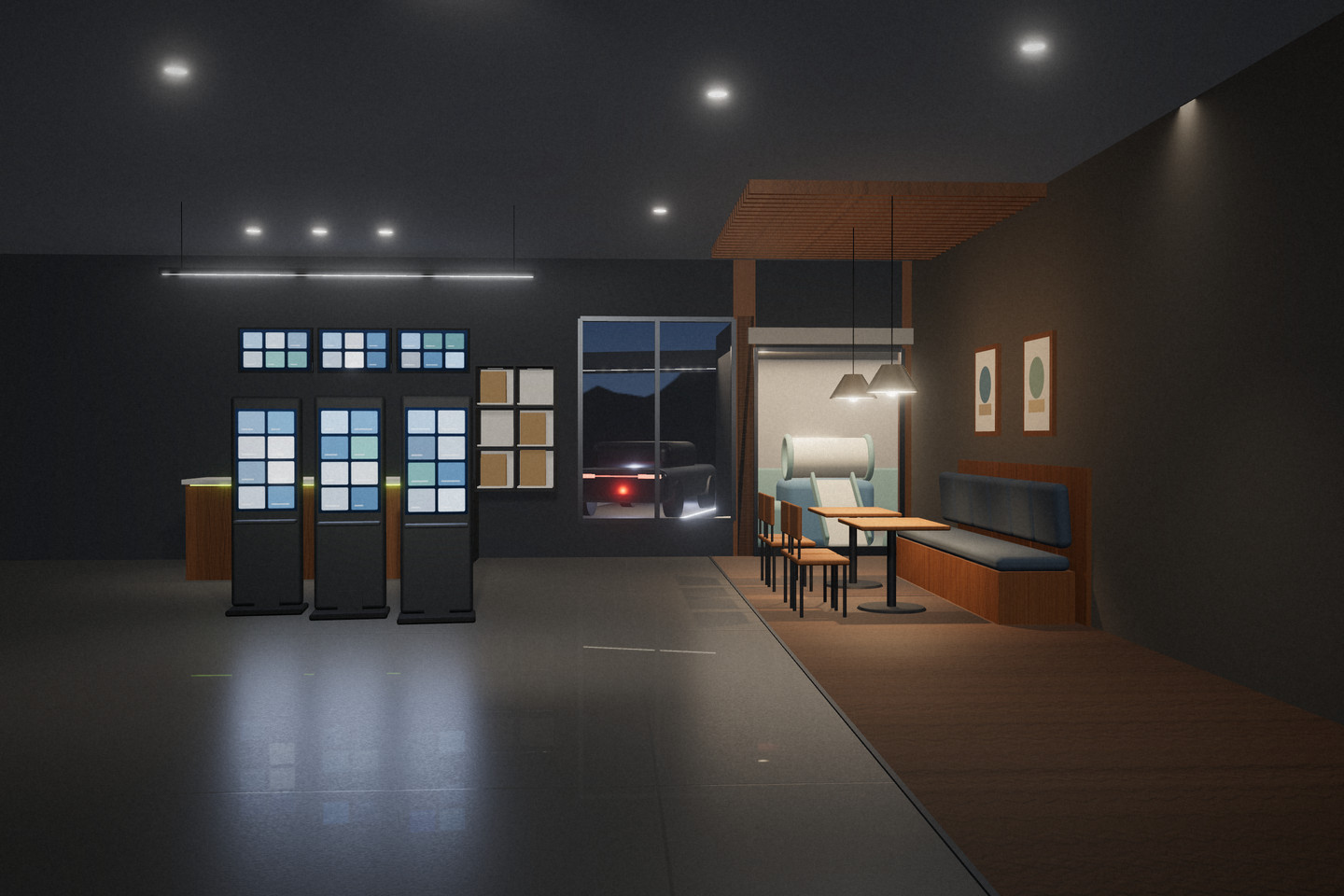
A counter, a lane, a kiosk, an app, a pickup shelf and a courier. Each is optional.
Self-order kiosks and mobile ordering were added alongside the staffed counter, not in place of it. In McDonald’s own locator in October 2026, 96.7% of US restaurants were flagged for drive-thru and 93.2% for indoor dining.S3
The company What it measures
Larger orders, more visits, more customers it can identify.
Executives have said kiosk users tend to place larger orders and that kiosks bring an average-check boost. The CFO described loyalty members’ visits rising from 10.5 to 26 a year.S8S9 The customer-side benefit is real; the figures McDonald’s publishes about it are its own.
The issue is not whether digital ordering or efficiency is hostile. It is whether the balance of the relationship increasingly favours measurable transaction economics while some harder-to-measure experiential benefits become less central. Some evidence points that way. It does not support a broad hostility verdict.
01Why we looked
What is the McDonald’s–customer relationship today, and who gets what from it?
This is CHI’s standard company assessment of McDonald’s, focused on the United States. It asks the question every company page asks: what value does the company provide, where has extraction or customer-yield optimization increased, and what does the evidence support overall?
It is built on the evidence already gathered and verified for CHI’s Special Investigation, which traces the customer proposition across five decades. No new broad research was done for this page. Where the investigation’s final verification stage narrowed or corrected earlier material, the narrower version is used here.
One rule runs through the page. Four things are kept apart: genuine customer convenience, operator efficiency, work the customer now does, and the exchange of identity and data. The same technology can serve more than one of them at once. Convenience is not treated as fake value because McDonald’s also benefits from it.
02What McDonald’s still does well
The functional value is substantial, and most of it arrived as an added option.
McDonald’s defined itself by speed, price and a standard menu from the start. Its 1966 purpose statement describes “drive-in self-service restaurants” serving “a standardized menu of low price food” with “efficient, courteous and rapid service.”S5 Speed and convenience are what many customers come for, and they have more of both than before.
Many ways to order
Staffed counter, drive-thru, self-order kiosk, mobile app, curbside or shelf pickup, and delivery, chosen by the customer.S3
The counter remained
Kiosks were introduced alongside the counter. No evidence found shows they replaced staffed ordering or that customers must use them.
Indoor dining at most restaurants
12,869 of the 13,805 US restaurants in the October 2026 locator, 93.2%, were flagged for indoor dining.S3
Speed without leaving the car
The first drive-thru opened in 1975. By 1996 McDonald’s said the drive-thru accounted for 54 percent of its US sales: customers chose it in large numbers.S5S6
Order ahead, customize, pay
Ordering ahead, on-screen customization and cashless payment let customers order at their own pace and arrive when the food is ready.
Food brought to the door
Through third-party couriers since 2017. One commercial study found the same basket cost substantially more delivered than in the restaurant.S14
Points, offers, and open value deals
Rewards return value to frequent customers. Baseline value offers introduced from 2024 were not conditioned on the app, according to McDonald’s US deals page.S4
Also credited, at full weight
- Safer, year-round play formats. Indoor soft-play PlayPlaces followed the older outdoor metal equipment from 1989, with about 800 opened in 1995 alone.S5
- Healthier children’s defaults. From 2011, as reported at the time, Happy Meal defaults moved to smaller fries and fruit.
- Voluntary data exchange. No evidence was found of unlawful or covert data collection. Joining the loyalty programme is a choice.
- Universal value offers. Not every deal requires an account or an app.
Convenience is not fake value because McDonald’s also benefits from it. The CHI question begins where the two can be told apart.
03The customer relationship today
From an anonymous counter transaction to an optional, identified, multi-channel one.
Earlier relationship, c. 1980–85
- The customer orders from an employee at a counter or drive-thru window, pays, and eats in the dining room, in the car or at home.
- At some restaurants, a family may stay for a Playland or a booked party.
- The child meets the brand through advertising, characters, and a Happy Meal box and toy.
- The transaction is anonymous and the relationship is physical.
Modern relationship, 2026
- The customer may order ahead through an account, customize on a screen and use a kiosk, a lane, a pickup shelf or a courier.
- They may join a loyalty programme and receive app-only offers.
- Staff contact may happen only at the handoff.
- Each of these is optional. The counter and, at most restaurants, the dining room remain.
The same systems do several things at once. The table separates them, because a single device can be a genuine convenience for the customer and an economic gain for the operator at the same time.
| Category | What belongs in it | Evidence |
|---|---|---|
| Genuine customer convenience | Ordering ahead; more channels; payment without cash; rewards; table service where offered | Customers chose the drive-thru in large numbers long before the app. Preference for a channel does not show preference for the whole bundle. |
| Company and operator efficiency | Larger kiosk orders; higher check; visit frequency; labour deployment; throughput | Executive statements on order size and check; the CFO’s loyalty frequency figure; a stated efficiency target.S1S8 |
| Customer labour | Entering the order; managing an account; collecting from a shelf | A change of role, visible in restaurants. No McDonald’s figure for customer time saved, kiosk accuracy or effort was found. |
| Identity and data exchange | Account creation; transaction data; personalised and app-only offers | Identified users were 25% of systemwide sales in Q2 2024, so most sales were still to customers the company could not identify. No evidence of unlawful or covert collection.S8 |
04Finding: optimizing the existing customer
McDonald’s explicitly measures, and benefits from, higher check, higher frequency and more identifiable customers.
This is the cleanest CHI mechanism on the page. It rests on McDonald’s executives’ own statements, made on earnings calls and in interviews. None of them gives a kiosk check figure; the statements are directional.
CEO Steve Easterbrook told CNBC: “What we’re finding is when people dwell more, they select more,” and “There’s a little bit of an average check boost.”S9
Kiosk checkCEO Chris Kempczinski, Q4 2019 call: “people tend to have larger orders when they do self-order kiosk.”S8
Order sizeCFO Ian Borden, Q4 2023 call, on the Kerwin Frost adult box: “by encouraging our customers to trade up with a full margin promotion, we fueled top-line growth with a strong average check lift.” According to a transcript.S8
Full-margin promotionKempczinski, Q2 2024 call: “identified users now represent 25% of system-wide sales.” A global figure.S8
IdentificationKempczinski, Q3 2024 call: the collector’s cups promotion “drove high-check, full-margin traffic”. According to a transcript.S8
Full-margin trafficBorden, Q4 2025 call: an average customer visited 10.5 times in the twelve months before joining the loyalty programme and 26 times in the twelve months after.S8
Visit frequency10.5 visits before, 26 after, is a before-and-after figure for customers who chose to join.
It does not establish that the loyalty programme caused the increase. People who already intend to visit more are more likely to sign up. The figure shows what McDonald’s measures and reports, not what the programme did.None of this is improper in itself. Selling more to willing customers is ordinary retail. It is CHI-relevant because it describes, in the company’s own words, how McDonald’s economically optimizes the relationship it already has: existing-customer yield, the SP002 pattern. The counterweight is printed beside it: baseline value offers introduced from 2024 were open to every customer.
05Finding: convenience and customer labour
The customer does more of the transaction, but also gets more ways to transact.
What the customer gains
Real, used and chosen.
- Ordering ahead and skipping the queueMobile ordering and pickup let a customer arrive when the food is ready.
- Control over the orderKiosks and the app show the full menu and customizations at the customer’s pace.
- Delivery, pickup and the laneMore places and ways to receive food, including without leaving the car or the house.
- Rewards and cashless paymentPoints and offers for frequent customers; paying without cash.
What the customer now contributes
Work and information once handled by staff, or not collected at all.
- Entering the orderOn a kiosk or a phone, rather than telling an employee.
- Managing an accountCreating and maintaining a login to use the app and rewards.
- Collecting the foodFrom a pickup shelf, a lane or a courier handoff.
- Identity and data for some offersSome recurring offers are available only in the app with Rewards enrolment, according to McDonald’s US site.S4
This is an exchange, not exploitation. No evidence establishes that kiosks eliminated staffed ordering, that customers are forced to use them, or that data is collected covertly or unlawfully. Most of the digital changes add an optional channel.
The open finding is narrower. McDonald’s publishes the operator-side benefits: order size, check, frequency and identified share. No McDonald’s-published figure for customer time saved, kiosk order accuracy or customer effort was found. The benefits that are measured in public are the company’s.
The chief executive has named the trade-off himself. In a message to the McDonald’s system reported by Restaurant Business on 1 June 2026, Kempczinski wrote: “As more of the customer journey becomes automated, there are fewer opportunities for guests to connect with crew,” and “With fewer interactions, the bar for hospitality that makes people feel seen, welcomed, and valued only goes up.”S10
06Finding: the experiential layer
The physical child-experience layer became less central. Intent and exact size are not established.
McDonald’s deliberately built a child-focused experience layer on top of an efficiency and family model that already existed. Its president said in 1973 that the move to the suburbs “was a conscious effort to go for the family business. That meant going after the kids.”S12 Characters, Happy Meals, birthday parties and playgrounds followed.
Play areas and parties were store-dependent, never universal. No count found puts play areas at a majority of US restaurants in any year.
Playland facilities, systemwide in six countries: about one restaurant in seven. Not a US count.S5
Indoor Playplaces opened that year, “to build sales and profits”. A one-year flow, not a total.S5
About 5,500 of 13,700 US locations, as reported by Nation’s Restaurant News. The reporter’s figure.S11
About 2,700 of roughly 13,800 US restaurants listed with a PlayPlace in McDonald’s own locator.S3
Different methods. The 2007 figure is a round number in a trade article; the 2026 figure is CHI’s one-day count of restaurants carrying a locator attribute, unaudited and including some small spaces. The two figures were produced by different methods; the difference is indicative and is not a measured decline. This page calculates no percentage change.
What cuts the other way
- Some restaurants kept or rebuilt play areas. Among 46 Texas permit records that mention a play area, 24 kept and refreshed one. Texas is not representative.S13
- Some added them. Six of the same 46 records added a play area.S13
- No remodel standard requiring removal was found. Where a reason is recorded for one restaurant, it is usually drive-thru capacity or footprint.
- The 2026 designs include play places. “The new designs include upgraded play places, improved dining rooms”, according to a transcript of the Investor Day.S2
The physical child-experience layer became less central. Why, and by how much, the evidence does not say.
No corporate decision to reduce play areas was found, and this page does not supply one. Most restaurants never had a play area, so for many customers nothing in this layer changed.07Nostalgia and retained brand equity
Childhood-associated brand properties still produce high-margin adult demand.
McDonald’s has explicitly repackaged childhood-associated brand properties for adults. Kempczinski told investors in October 2022: “we tapped into one of the most nostalgic McDonald’s experiences, enjoying a Happy Meal as a kid, and repackaged it to make it relevant for adult fans”, according to a transcript.S8
| Promotion | Company-stated result | Limit that travels with it |
|---|---|---|
| Adult box, Oct 2022 | “50% of our supply of collectibles was sold in the first four days of the promotion”S8 | Share of supply, not units. Q4 2022 US comparable sales rose 10.3%, but McDonald’s did not attribute any share of that to the box.S7 |
| Grimace, Jun 2023 | “It contributed to the strong double-digit comparable sales growth for the quarter in the U.S.” (Borden)S8 | A year later the company “lapped the Grimace Birthday Meal and shake with negative comps.” |
| Kerwin Frost box, Dec 2023 | “a full margin promotion” with “a strong average check lift”S8 | No unit or sales figure given. |
| Collector’s cups, 2024 | “drove high-check, full-margin traffic”S8 | No measured result was found. |
| McDonaldland Meal, Aug 2025 | — | No measured result was found. |
This supports SP002: repackaging at full price to existing fans. It also shows that childhood-associated brand equity remains commercially valuable decades later. It does not show which historical mechanism created that equity. Advertising, characters, toys, price and ubiquity are all candidates, and most restaurants never had a play area. No buyer breakdown shows that adult buyers visited PlayPlaces as children, and McDonald’s frames each promotion as also reaching a new generation.
08The 2026 strategy
More efficiency and more hospitality, at the same time.
McDonald’s presented both sides in one document on 23 September 2026. Management does not present it as a change of course: on the August 2026 call Kempczinski said, “We don’t have a strategy problem.”S8 What differs is how much definition each side has been given.
Targets, money and metrics
A target of “about 250 basis points of gross restaurant-level efficiency”, which the press release equates to “roughly $100,000 in annual cash flow benefits for the average U.S. restaurant”.S1
“approximately $8.5 billion in total NEXT partnering support through 2036” to franchisees, “through a combination of rent relief and capital support.” The release earmarks none of it for play places.S1
Of the Archy drive-thru voice system, CIO Brian Rice said: “As Archy scales, it will free at least 50 labor hours per week.” A spoken remark, according to a transcript; not in the press release.S2
Programmes, language and designs
People > NEXT “equips employees to deliver a new level of hospitality that creates a better, more consistent experience for customers – increasing repeat visits.”S1
Make It Golden, “a multi-year, Systemwide commitment to elevate the customer experience”, beginning on 5 October 2026.S1
“The new designs include upgraded play places, improved dining rooms, and more open kitchens”: Jill McDonald, according to a transcript of the Investor Day. No number, share or timetable was given.S2
What the page concludes. The efficiency side has a target, a dollar value and committed support. The hospitality side has a named programme and management language; the play-place and dining-room designs have one spoken sentence and a prototype. That is a finding about what was announced, not about intent.
09CHI pattern assessment
One pattern supported. One partly. Two not at all.
CHI tests every company against four recurring patterns of customer-economic change. None is used for scoring.
Charging for or metering access outside the paying entitlement.
Does not supportNo qualifying monetization of previously unmonetized access was established. Play and parties were amenities for paying customers.
Getting more from the same customers.
SupportsThe strongest mechanism: kiosk check lift and larger orders, loyalty frequency, and full-margin nostalgia promotions, in executives’ own words.
Withdrawing or neglecting older features.
Partially supportsClean for specific features: All Day Breakfast was removed in 2020 “to simplify operations in our kitchens”.S11 Play areas indicate deprioritization but are not documented as a deliberate withdrawal programme.
Passing a named outside cost to customers.
Does not supportNo verified evidence links a material external cost pressure to a customer-economic action designed to pass it through.
Experiential Value Depletion — a company reducing hard-to-measure benefits while optimizing measurable transaction economics — remains a case-study concept from the Special Investigation. The evidence is insufficient to make it a formal CHI mechanism, and it is not a Lexicon pattern. No new pattern or code has been created.
Three observations
What gets counted
McDonald’s publicly measures order size, check, frequency and identified-user share. No comparable customer-side measure of experiential value was found, and no play-area count appears in any SEC filing found for 2001–2026.
Equity that lasts
Childhood-associated brand properties can still produce high-margin adult demand decades later. That is evidence the equity exists, not of how it was built.
One system, two beneficiaries
The same technology can create genuine convenience for the customer and economic optimization for the operator at the same time. Neither cancels the other.
These are analytical observations, not accusations.
10What the evidence does not show
Claims this page does not make, and why.
Most changes add an optional channel. Technology is assessed by who benefits and whether the customer can decline.
Kiosks were added alongside the counter. No evidence found shows they eliminated staffed ordering or jobs.
The data exchange is voluntary and tied to rewards and offers.
The 10.5-to-26 figure compares the same self-selected people before and after joining.
No decision, policy or remodel standard requiring removal was found; some restaurants added or rebuilt play areas.
The 2007 and 2026 figures come from different methods. No percentage decline can be stated.
In 1981 Playland facilities were at about one restaurant in seven systemwide. No count found reaches a majority.
Efficiency was the base from the beginning; the child layer and the drive-thru grew together.
Happy Meal promotions continue, about one restaurant in five is listed with a PlayPlace, and the 2026 designs include play places.
They show childhood brand equity exists, not which mechanism created it.
No source measures whether functional value replaced experiential value, for whom, or by how much.
A customer whose restaurant never had play or parties lost none of that layer and gained every later convenience.
Deeper investigation
McDonald’s: The Experience Layer
How playgrounds, parties, characters, drive-thrus, kiosks and digital ordering changed the customer proposition across five decades.
Read the Special Investigation11Outcome
McDonald’s gives customers substantial functional value. Speed, low-friction ordering, the drive-thru, kiosks, the app, pickup, delivery, customization, rewards and payment convenience are real, and most of them arrived as options alongside a counter and a dining room that remain at most restaurants.
The same systems let McDonald’s measure and grow the yield of the customers it already has: larger orders, a check lift, more frequent visits, more identified customers and full-margin nostalgia promotions. Meanwhile the physical child-experience layer, always store-dependent, became less central, by an amount nobody has measured.
Why not “partially supports”? Because only one of the four patterns is supported; the experiential decline is indicated, not measured, and no decision behind it was found; and the customer side of the exchange gained real, chosen value. Why not “does not support”? Because the yield optimization is explicit, in the company’s own words, and the benefits McDonald’s measures and publishes are its own.
12Limitations
What this assessment could not see.
- No new research. This page draws only on the evidence verified for the Special Investigation.
- No customer-side measure of time saved, effort or experiential value was found, so the exchange cannot be netted.
- Play-area counts for 2007 and 2026 come from different methods; the 2026 locator count was taken on one day and its attribute was not audited.
- Kiosk order size rests on executive statements with no published figure.
- The identified-user share is a global figure for one quarter.
- Investor Day remarks rest on a third-party transcript; the press release is the primary document.
- Rewards terms and app-only offers were read from live pages that change; they are paraphrased.
- Pricing is outside this page; SP004 could be revisited by a pricing-focused investigation.
13Methodology and sources
How this page was built, and how far it can be relied on.
Evidence base
A standard company assessment derived from the three research stages behind CHI’s Special Investigation: a master dossier, a verification pass and a claim re-check. The final re-check controls wherever the stages differ. No new broad research was done.
How claims are stated
McDonald’s own documents are quoted with their date. Spoken remarks from calls and the Investor Day are marked “according to a transcript”. Items read only through summaries are paraphrased, never quoted.
Independence
McDonald’s was not a participant in this research and has not reviewed it. Figures McDonald’s reports are its own and unaudited.
McDonald’s press release, Exhibit 99.1 to Form 8-K, 23 September 2026: People > NEXT, Restaurant > NEXT, Make It Golden, the 250-basis-point target and the $8.5 billion partnering support. sec.govFirst-party filing
McDonald’s Investor Day, 23 September 2026, third-party transcript: remarks by Jill McDonald (play places) and Brian Rice (Archy). transcript · AxiosTranscript
McDonald’s US restaurant locator, CHI census of 2 October 2026: 13,805 restaurants; 2,707 listed with a PlayPlace; 13,353 flagged drive-thru; 12,869 flagged indoor dining. Counts restaurants carrying an attribute, not physical playgrounds; a single-day, unaudited snapshot. mcdonalds.comFirst-party data · CHI count
McDonald’s US Rewards FAQ and deals page, as read on 2 October 2026 and re-checked on 6 October 2026: points expiry, app-only offers, and value offers open without the app. Paraphrased. Rewards FAQ · dealsFirst-party · live pages
McDonald’s annual reports, 1966 (purpose statement), 1981 (Playland facilities), 1995 (indoor Playplaces) and 1996 (drive-thru share of US sales). archive.org collectionFirst-party · historical
McDonald’s corporate article on the first drive-thru (Sierra Vista, Arizona, 24 January 1975), 11 November 2022. corporate.mcdonalds.comFirst-party
McDonald’s fourth-quarter 2022 results, Exhibit 99.1 to Form 8-K, 31 January 2023: US comparable sales. sec.govFirst-party filing
McDonald’s earnings-call transcripts: Q4 2019 (kiosk order size), Q3 2022 (adult box), Q2 2023 (Grimace), Q4 2023 (Kerwin Frost box), Q2 2024 (identified users; Grimace lapped), Q3 2024 (collector’s cups), Q4 2025 (loyalty frequency) and Q2 2026 (“strategy problem”). Q4 2019 · Q3 2022 · Q2 2023 · Q4 2023 · Q2 2024 · Q3 2024 · Q4 2025 · Q2 2026Transcripts
CNBC, 4 June 2018: Steve Easterbrook on self-order kiosks. cnbc.comJournalism
Restaurant Business, 1 June 2026: Kempczinski’s message to the McDonald’s system on automation and hospitality. restaurantbusinessonline.comTrade press
Nation’s Restaurant News, 15 January 2007 (PlayPlace locations) and 2 October 2020 (All Day Breakfast). 2007 · 2020Trade press
TIME, “The Burger That Conquered the Country”, 17 September 1973: Fred Turner. time.comJournalism · historical
Texas Department of Licensing and Regulation, architectural-barriers permit records: 46 of 1,602 McDonald’s records mention a play area. Not representative of the US. tdlr.texas.govPublic records
Delivery: McDonald’s US delivery through a third-party operator from 2017, and a commercial basket-price study of April 2025, both as summarized in CHI’s research dossier. Paraphrased.Secondary · paraphrase
CHI Special Investigation, McDonald’s: The Experience Layer, and the Stage 1–3 research record behind it, held by CHI.CHI research
The complete research dossier, verification files and the register of claims withheld from publication are preserved by CHI and are not reproduced here. McDonald’s and related marks belong to their owners; the name is used only to identify the company, and no endorsement or affiliation is implied. This page is research, not legal or financial advice.
Reading this beside the rest of the index
Every company here is assessed against the same question: was the exchange good for the customer?
This is McDonald’s standard company page and the first assessment in the Restaurants sector. The Special Investigation is a separate, deeper piece; both stay on the site.